Showing posts with label habitat. Show all posts

Thursday, 30 April 2015

The Gray jay

The Gray, or Grey jay has a breeding range that extends from northern parts of Canada and Alaska, southwards through the forests to northern California on the Pacific coast, the Rocky Mountains including parts of New Mexico and Arizona, in the Midwest, northern parts of Wisconsin, and in the east New York state.
 
Gray Jay - DickDaniels (http://carolinabirds.org/) -CC BY-SA 3.0

 Winter is the non-breeding season for these birds and their range is very much the same as their breeding range though weather conditions may force them to seek lower altitudes and they may follow food resources.

Their most common habitat is coniferous and coniferous-deciduous forests of spruce, fir, aspens and birch trees. The Gray jay has never been observed and recorded anywhere other than North America.  Read more

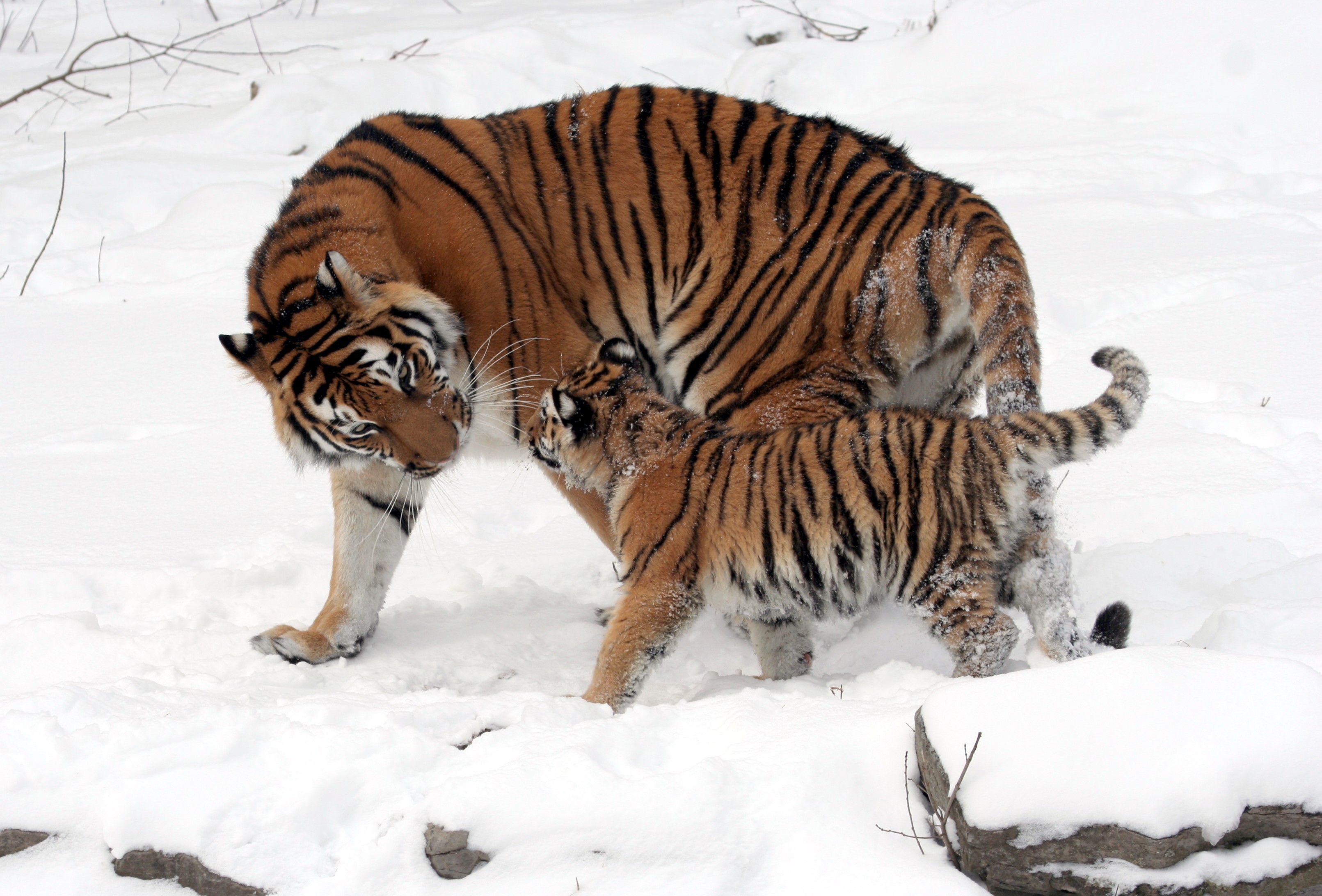
Siberian Tigers (Panthera tigris altaica)

Of all the tigers the Siberian is the largest and renowned for its strength and power. Siberian tigers  are also known as Amur tigers and they live mostly in remote forested parts of eastern Russia and across the border in China. 

Amur tiger - Dave Pape - Public Domain
 Habitat

Their environment is one of the coldest and harshest in the world, but it does offer some advantages for them. There are far fewer humans encroaching on their habitat and the vast forests give them more space to roam free. During the 1940s hunting had taken a huge toll and the Siberian tiger was faced with extinction with only 40 individuals left in the wild. It was saved when Russia became the first country in the world to give the tiger protection. It also greatly benefited from the Cold War, which largely closed its remote habitat to people.  Read more

Wild Chinese giant salamanders under increasing threat

The Chinese giant salamander (Andrias davidianus) are descendants of a very ancient species that were around when dinosaurs roamed the Earth. They belong to the Cryptobranchidae family which is about 170 million years old and they remain very similar to their ancient relatives.

Range and habitat

The Chinese giant salamander is indigenous to China and was once widespread but its population has become more scattered as numbers have diminished in the wild. They inhabit rocky mountain brooks, streams and lakes showing a preference for fast running, clean water such as can be found in some of the tributaries of the Yangtze, Pearl and Yellow Rivers . They prefer forested regions around 100 to 1,500m above sea level.


Chinese Giant Salamander - H. Zell - CC BY-SA 3.0

Family dens

Several female salamanders lay their eggs in large crevices or hollows under the water. The eggs are then cared for by in these underwater dens by the males who take charge and care and protect the eggs until about one month after they have hatched into tiny tadpoles. From these tiny tadpoles Chinese giant salamanders when fully grown can measure up to 1.8 m in length and can weigh up to 50 kg. 

Critically endangered in the wild

Chinese giant salamanders can live up to 52 years of age if undisturbed, but today, few, if any achieve this. In the wild salamanders are listed by the International Union of Conservation for Nature in their Red List of Threatened Species as critically endangered.  Read more